Thursday, August 31, 2017
Nonfiction Picture Book Challenge: Can an Aardvark Bark?
I've decided to take the Nonfiction Picture Book Challenge presented by my fellow Pasadenan Alyson Beecher and today I'm sharing the book Can an Aardvark Bark? by Melissa Stewart and illustrated by Steve Jenkins.
The whole book is so beautiful and so simple that it could be shared in a storytime, and then pulled down from the shelf later by curious children who can pore over its information about animals in solitude and wonder.
What makes this book so perfect for storytime is that it lends itself to interaction and noise! You could ask the kids if they can bellow like a giraffe, or bark like a seal, or whine like a porcupine! You can find sound clips of the animals making these sounds too, but it might be better for developing preschoolers to start by using their imaginations to invent what they think a giraffe bellow sounds like.
Learning animal sounds has many benefits for early literacy. I've especially seen benefits for children with special needs. My son, who is autistic, was unable to say more than 30 words at age 2 1/2, but he could say many animal sounds. Animal sounds were a substantial portion of his early vocabulary.
Here is one of my favorite flannelboards dealing with animal sounds. First, I put all the sounds up haphazardly and incorrectly, and ask the preschoolers to help me put the words where they are supposed to go. Kids get print knowledge, phonetic awareness, and so much fun out of doing this!
Want to find more great nonfiction picture books? I post new nonfiction books to the Pasadena Public Library's Children's Book Suggestions LibGuide as we get them. I also have archived lists available for download as PDF files.
Tuesday, August 29, 2017
The Benefits of Introducing Kids to Published Authors
(Personally, I was the overconfident type--I was the kid who was sending my handwritten manuscripts to Big 5 publishers and couldn't imagine why they wouldn't publish them! I may not have struggled with getting words on paper, but that didn't mean I was ready, and it was sometimes hard for me to see what improvement was needed. I didn't know any published authors, so I had no way of knowing what the road ahead would look like.)
Amazingly, for BOTH types of young writers, the same approach can work wonders: introduce them to someone who has lived longer and accomplished more, and let her tell them about the changes she had to make along the way.
This is why it's so vital to me in my work as a librarian to not only make a case for kids reading lots of books, but for meeting lots of authors. I do my best to bring published authors to the library at least a few times a year (given budget restraints). It's important to me that kids get moments like this, when they got to see author Kristen Kittscher describe the hardest thing she had to learn as a writer, and how learning this improved her plots.
Then she gave kids an effective, simple formula for crafting better plots:
What if...
And then...
However...
So...
You can read more about her plot exercise and view photos and videos of Kristen and the kids at Pasadena Public Library's Kids Blog.
And if you don't have the resources to be able to hire authors to visit your classes, that doesn't have to stop you from bringing authors to your library or school! Many authors are willing to skype with classes, or do chat interviews or Q&As. Ask around and find out what authors live in your area, and start there. Kristen Kittscher is a longtime Pasadena resident, so we lucked out there!
Sunday, August 20, 2017
Writing Parties for Primary Grade Kids
Monday, July 10, 2017
Split-Panel Books: Writing Parties for Primary Grade Kids
There are supposedly over a hundred different sentences you can make by turning the different panels--I haven't tried myself, but I believe them! And the book is great for a storytime or a large group, because the pictures are so big and bold.
Personally, I have a certain order I like to read the book in. I like to make silly things happen to the grandma. She goes from being a "strawberry flavored granny" to an "exploding granny" while the pictures show her head changing in shape from ice cream scoops to a volcano.
This book can teach kids many different English language concepts, from sentence structure to parts of speech. You can start by identifying the pattern in the book (Interjection, Article, Adjective, Noun) and asking the kids to create a few sentences as a group that would fit into Sharratt's pattern.
When making split panel books with children at the library, I have black-and-white pictures of people and animals that I've downloaded from the Internet and cropped to be just the right size to fill the right half of one letter-sized paper in landscape orientation. I try to make sure the body parts line up at least somewhat, with the feet, head and stomach more or less interchangeable. It's never as perfect as Sharratt's flawless illustrations, but it works! You could have students draw their own illustrations, but I find this method saves time for learning the writing concept.
I make copies of the pictures and cut them out, and scatter them all over the table along with scissors and glue sticks. I let kids glue the pictures into blank books I've created simply by folding several plain letter sheets and stapling them very close to the fold.
After the pictures are glued, you take a pair of scissors and cut the pages down the middle--but tell the kids to be careful not to cut clear across the fold of the book! Then I like to draw silly additions to the pictures, but that's optional. I encourage the kids to write something on the opposite side of each picture. There are different sentence formulas you could use. You could use Sharratt's Interjection-Article-Adjective-Noun formula, or you could create a different one. My preferred sentence formula for this activity is Subject-Predicate. The top half describes the animal or person and the bottom describes something the animal or person is doing.
I always make a sample book so that the kids see that indeed you CAN turn those blank pages into something funny!
If you liked this workshop idea, stay tuned for information about my book, 36 Workshops to Get Kids Writing: From Aliens to Zebras, which will be published by ALA Editions soon!
Saturday, July 8, 2017
Bears Storytime
Books I Shared
Our first story, Bear's Big Breakfast by Lynn Rowe Reed and illustrated by Brett Helquist, is a fun, alliterative romp through the forest where Bear is hungry for something beginning with "B." The bunny, bat, bee, bluebird and boa constrictor are all eager to help him find a better meal than them!
Our second book, Bear Cubs by Anne Wendorff, was the perfect nonfiction introduction to how a bear spends its first several weeks as a blind cub before it grows into the fearsome creature we know and love! Just enough text to make this book good for sharing with preschoolers.
Our third book, That's (Not) Mine by Anna Kang and illustrated by Christopher Weyant, was about two bears who are having trouble sharing a chair. The law that "I'm sitting in it, so it's mine," isn't working out so well for them, and they just keep arguing. (Sound like any of your kids?)
Flannel Board Story
Goldilocks and the Three BearsI told this folktale with flannel pieces and I asked the kids to hold up a hand whenever I said an opposite. This was an idea I read about in Transforming Preschool Storytime. So when we said, "The porridge in the big bowl was too hot," we held up one hand. When we said "The porridge in the medium-sized bowl was too cold," we held up our other hand. And when we said, "The porridge in the smallest bowl was just right," we clapped our hands together!
You can read a retelling of this story at http://www.hellokids.com/c_27878/reading-learning/stories-for-children/classic-stories-for-children/goldilocks-and-the-three-bears. There are a lot of great book versions of this fable, interpreted by different authors and illustrators. You can view them here in our online catalog.
Video We Shared
Our film story, based on the book Happy Birthday Moon by Frank Asch, is a sweet story about a little bear who thinks he is talking with the moon when he hears his voice echoed to him. His simple but generous heart motivates him to seek out a hat for the moon's birthday, and also to apologize to the moon for losing the hat it gave him for his birthday.
Songs and Rhymes We Shared Without Music
The following two songs we sang with jingle bells, shaker eggs, drums and other percussion instruments! Pease Porridge Hot Pease porridge hotPease porridge cold
Pease porridge in the pot
Nine days old
Some like it hot
Some like it cold
Some like it in the pot
Nine days old
This Little Bear (I adapted the song "This Old Man" to include bears and the musical instruments I have)
This little bear, she played one
She played knick knack on her drum
With a knick knack paddy whack
Give a dog a bone
This little bear came rolling home
This little bear, he played two
He played jingle bells on my shoe
With a jingle jangle
Give a dog a bone
This little bear came rolling home
This little bear, she played three
She played shaker eggs on my knee
With a shake shake, shakey shake
Give a dog a bone
This little bear came rolling home
This little bear, he played four
He played tap tap on the floor
With a tap tap tappy tap
Give a dog a bone
This little bear came rolling home
We're Going on a Bear Hunt (much abbreviated from the book by Michael Rosen)
(pat knees to the beat)
We're going on a bear hunt
We're going to catch a big one
I'm not scared!
What's up ahead?
...Grass.
Long, wavy grass.
We can't go over it
We can't go under it
Oh, no.
We have to go THROUGH it.
swishy, swashy... (rub hands together)
We're going on a bear hunt
We're going to catch a big one
I'm not scared!
What's up ahead?
...Mud.
Thick, oozy mud.
We can't go over it
We can't go under it
Oh, no.
We have to go THROUGH it.
squelch, squerch... (stomp feet)
We're going on a bear hunt
We're going to catch a big one
I'm not scared!
What's up ahead?
...A cave.
A dark, scary cave.
We can't go over it
We can't go under it
Oh, no.
We have to go THROUGH it.
tiptoe, tiptoe...
What's that?
Two bright eyes,
Two furry ears,
One big nose...
It's a BEAR!
Quick, out of the cave! Tiptoe, tiptoe...
Back through the mud! Squelch, squerch...
Back through the grass! Swishy, swashy...
Back to our house. Open the door,
Run up the stairs--
Oh, no! We forgot to shut the door!
Run back down the stairs...
Shut the door (creeeaak)
Back upstairs!
Into the bedroom!
Under the covers!
WE'RE NEVER GOING ON A BEAR HUNT AGAIN.
The Other Day I Saw a Bear
We also sang this call-and-response song. The verses are call-and-response style at first, then they go into unison. I first learned this song when I was a young Girl Scout. I used to avoid doing longer songs like this at storytime, but recently I've branched out into more call-and-response songs and I think they're an important way to build early literacy and really cement the lyrics in the child's memory!
The other day (The other day)
I saw a bear (I saw a bear)
A great big bear (A great big bear)
Away up there (Away up there)
The other day I saw a bear
A great big bear away up there
He looked at me (He looked at me)
I looked at him (I looked at him)
He sized up me (He sized up me)
I sized up him (I sized up him)
He looked at me, I looked at him
He sized up me, I sized up him
He said to me (He said to me)
"Why don't you run? ("Why don't you run?)
I see you ain't (I see you ain't)
got any gun." (got any gun.")
He said to me "Why don't you run?
I see you ain't got any gun."
And so I ran (And so I ran)
away from there (away from there)
but right behind (but right behind)
me was that bear! (me was that bear!)
And so I ran away from there
but right behind me was that bear!
Ahead of me (Ahead of me)
I saw a tree (I saw a tree)
A great big tree (A great big tree)
Oh lucky me! (Oh lucky me!)
Ahead of me I saw a tree
A great big tree Oh lucky me!
The lowest branch (The lowest branch)
was ten feet up. (was ten feet up.)
I had to jump (I had to jump)
and trust my luck! (and trust my luck!)
The lowest branch was ten feet up.
I had to jump and trust my luck!
And so I jumped (And so I jumped)
into the air (into the air)
But I missed that branch (But I missed that branch)
away up there. (away up there.)
And so I jumped into the air
But I missed that branch away up there.
Now don't you fret (Now don't you fret)
and don't you frown (and don't you frown)
cuz I caught that branch (cuz I caught that branch)
on my way down! (on my way down!)
Now don't you fret and don't you frown
cuz I caught that branch on my way down!
That's all there is. (That's all there is.)
There is no more (There is no more)
until I meet (until I meet)
that bear once more. (that bear once more.)
That's all there is. There is no more
until I meet that bear once more.
Music from CDs We Shared
I love to sing and dance to music. Here's the song and CD recording that we sang as our opening song for today's storytime.“Clap Everybody and Say Hello” from Sally Go Round the Sun by Kathy Reid-Naiman
Clap everybody and say hello, (clap hands)
Clap everybody and say hello,
No matter what the weather.
Stamp everybody and say hello, (stomp feet)
Stamp everybody and say hello,
No matter what the weather.
Wiggle everybody and say hello, (wiggle)
Wiggle everybody and say hello,
No matter what the weather.
Jump everybody and say hello, (jump)
Jump everybody and say hello,
No matter what the weather.
Sing everybody and say hello, (wave hi)
Sing everybody and say hello,
No matter what the weather.
Continue the Fun
If you want more stories about bears, try these!Saturday, June 17, 2017
Using Great Books to Teach Writing Great Hooks
You'll notice the selection of books is very eclectic. It's something I try to keep in mind when planning workshops for kids who have all different reading interests.
Not all good books have a gripping first line, but of the ones that do, I found a lot of patterns. I grouped these into five categories:
After we read these excerpts and talked about each writing style, I read selections from five other middle grade books and asked the kids which category each one would fall under:
- The Tiara on the Terrace by Kristen Kittscher
- Crispin: The Cross of Lead by Avi
- Crenshaw by Katherine Applegate
- The Name of This Book is Secret by Pseudonymous Bosch
- A Snicker of Magic by Natalie Lloyd
Here's a photo from when I did this a few years ago:
The other thing I like about this is that they can see that different people respond to different things. It's all very subjective, and that's how writing is.
Friday, June 16, 2017
Music Literacy in the Library
Under the Spreading Chestnut Tree
First this book starts out illustrating an English song, then it changes to a "music map" with chestnuts rising and falling to indicate the rise and fall of the melody, and growing bigger or smaller to indicate how long to hold each note.
I loved the music literacy applications of that! Eventually, what the kids see is the official sheet music of what they just sang.
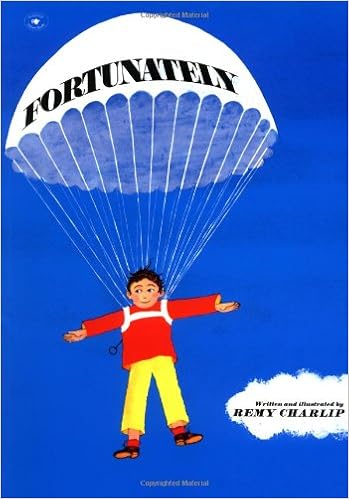
Fortunately
Freight Train
Playing a train whistle, Dayita taught the kids about the difference between rhythm and tempo. She kept the same rhythm but changed the tempo, or speed. Then she read the book, playing the whistle and inviting kids to clap along.
I hope I can have Dayita back at my library because there are a lot of possibilities I think she could explore with the kids if we were able to hire her for a longer series!
Thursday, June 1, 2017
My Takeaways from Library 2.017
Show Kids What a Web Page Looks Like From the Inside
When teaching kids about digital literacy and using the Internet for research, it's important that they have some concept of web coding, so that they know how easy it is to put a website together. This was mentioned in the presentation by Sarah FitzHenry and Kim Wilkens, and it resonated strongly with me because when I took my first HTML web design class in library school, it opened my eyes to how websites work, and how easy it is for any crook with an Internet connection and a laptop to create a webpage that looks exactly like a legitimate official site. For this reason, I definitely see myself using the X-Ray Goggles and the 45-min lesson that Kim created to teach web literacy.
Also, I just love their interactive, fun approach to teaching kids how to dissect fake news on the web. You can read more about that in this School Library Journal article.
(I would love to teach a full web design class for kids one of these days. And if I do, I think I'll be using the resources Mozilla created here!)
Don't Anchor -- Dig Deeper
I learned this one from Mark E. Moran. A lot of kids stop at the first Google result that looks like it has the information they are looking for. They often never get to the best stuff, which may be hidden as deep as 53 results in. Good researchers have to be persistent; you always have to be willing to go a little further than the first results page.
And probably my favorite concept for kids, also from Mark E. Moran:
Batman's Tool Belt
Batman wouldn't use just one research tool. He likes having a full toolkit with all kinds of gadgets. Kids need to learn to use more than just Google--use their school library, their public library, online databases, and search engines like the one Mark created for students: http://www.sweetsearch.com/
Tuesday, May 30, 2017
Hello world!
My name is AnnMarie Hurtado, and I'm a children's librarian and I'm always looking for great ideas to inspire and motivate kids to read and writer. I'm starting this blog to collect and share my own ideas, the books I recommend for kids, the ideas I find on the Internet.
I work at a public library serving children of all ages, but for the last few years I've worked hard to increase our services to the kids in kindergarten-3rd grade. I do a bilingual reading program called Lucha Libros, various science programs which I write about on my blog at Science in the Library, creative writing for kids 5-8 years old, creative writing for tweens 9-12 years old, and TONS of storytimes. Realizing that what I do is primarily focused on making young readers and young writers feel excited about coming to the library and reading books, I've set up this blog to share the ways I try to do that.
I hope this blog can be a resource for you teachers, librarians, parents and caregivers out there hungry for new books and ideas to take children's early literacy or emerging literacy to new levels of fun!